Buying a plot in Lahore is no longer simply a question of finding the lowest price per marla. Location, legal status, development stage, road connectivity, possession, surrounding development, payment terms, and the long-term usability of the property can all influence whether a plot is good for investment or not.
Among Lahore’s many housing societies, Etihad Town occupies an interesting position between established premium communities and newer, developing societies. Its different phases also have very different characteristics, so comparing “Etihad Town” with other societies requires looking at the specific phase and the buyer’s objective rather than treating every plot as equivalent.
Etihad Town vs Other Lahore Societies
Lahore offers everything from mature urban communities such as Johar Town and Wapda Town to large planned developments such as DHA, Bahria Town, Lake City and LDA City, as well as newer projects along the Raiwind Road and Ring Road corridors.
Etihad Town’s major distinction is that it combines a relatively established development history with newer phases that provide access to developing parts of southern Lahore. The developer’s current project information lists Phase I as fully developed, Phase II as more than 95% developed, Phase III around Adda Plot/Ring Road, and Phase IV around Chenab/Jhelum Road.
That makes the comparison more nuanced than simply asking whether Etihad Town is “better” than another society.
1. Location and Connectivity
Location is arguably the first factor to examine when buying a Lahore plot.
Etihad Town’s established phases are concentrated around important southern Lahore corridors, while Phase IV is connected with Chenab Road/Jhelum Road. The developer currently lists Phase IV as approximately two minutes from Ring Road, three minutes from Adda Plot Interchange, five minutes from Raiwind Road and five minutes from Pine Avenue. These are developer-provided travel estimates, so actual journey times can vary with traffic and route.
This location puts Etihad Town within a broader development belt containing Raiwind Road, Pine Avenue, Ring Road, Adda Plot, Lake City and DHA Rahbar.
Other societies offer different location advantages. DHA’s value proposition is strongly connected with its extensive network of established phases and mature surrounding development. Lake City benefits from its location along the Raiwind Road corridor, while LDA City has the advantage of being an LDA-developed project.
The important question for a buyer is therefore not simply:
“Which society has the best location?”
It is:
“Which location gives me the access I need today and the surrounding development I want over the next several years?”
2. Development Level Matters More Than the Society Name
One of the biggest mistakes in Lahore’s property market is comparing a possession-ready plot in one society with a newly launched plot in another as if they are identical investments.
They are not.
A developed community can provide:
- Existing houses
- Occupied streets
- Commercial activity
- Established utilities
- Schools and services
- Better visibility of actual living conditions
- Immediate construction potential, subject to applicable approvals
A developing phase may instead offer:
- Lower entry prices
- Installment plans
- New infrastructure
- Future commercial development
- Potential for capital appreciation as development progresses
Etihad Town illustrates this difference particularly well.
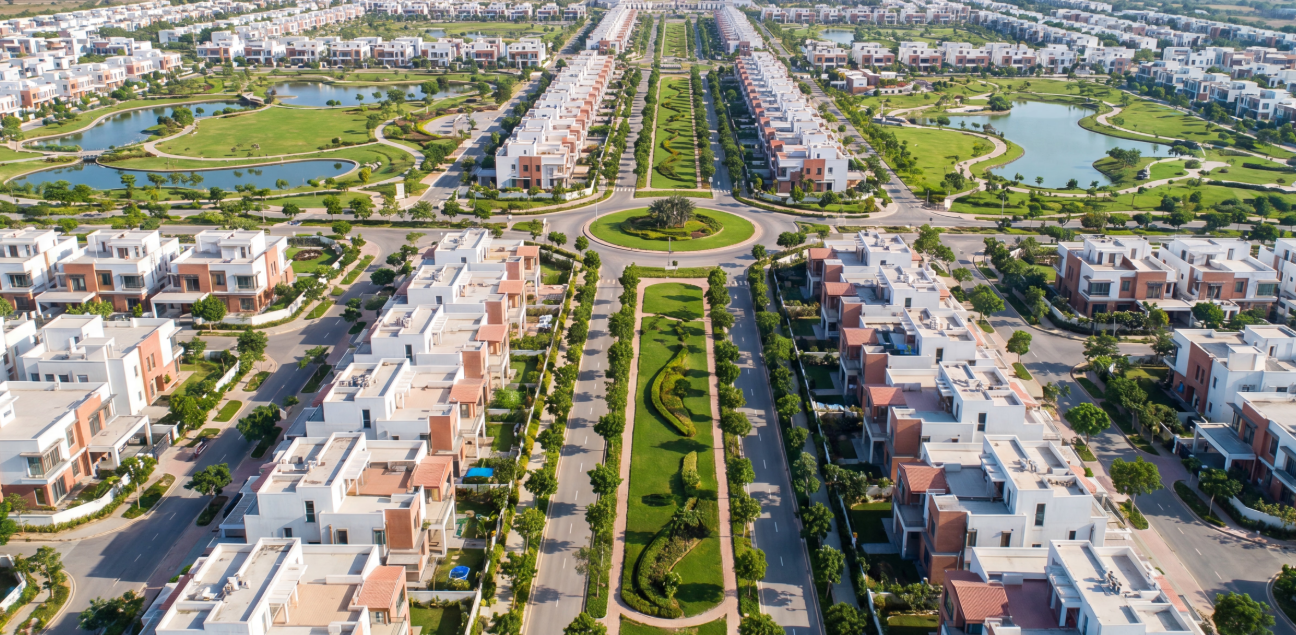
Phase I is presented by the developer as fully developed and delivered, while Phase II is described as more than 95% developed with possession across Blocks A–D and the Overseas Block. Phase III and Phase IV represent newer stages of development.
Therefore, someone comparing a plot in Etihad Town Phase I with a plot in a newly developing Lahore society is effectively comparing different investment profiles, not merely different brands.
Etihad Town vs DHA Lahore
DHA Lahore and Etihad Town appeal to somewhat different segments of the Lahore property market.
DHA has a long-established presence and multiple mature and developing phases. Its more established areas have extensive residential construction, commercial zones and surrounding infrastructure.
Etihad Town, meanwhile, offers buyers access to a planned community at locations around Lahore’s southern growth corridors. Its different phases provide different entry points and development conditions.
For a buyer considering the two, the comparison should include:
| Factor | Etihad Town | DHA Lahore |
|---|---|---|
| Development | Varies significantly by phase | Varies significantly by phase |
| Location | Strong southern Lahore connectivity | Extensive network across DHA |
| Plot options | Different sizes and phases | Extensive range |
| Community maturity | Phase-dependent | Phase-dependent |
| Entry price | Phase-dependent | Phase/location-dependent |
| Payment plans | Available on selected developments | Varies |
| Investment horizon | Depends heavily on phase | Depends heavily on phase |
| Lifestyle infrastructure | Developing/established depending on phase | Extensive in mature phases |
The key point is that a particular Etihad Town phase should be compared with a particular DHA phase, rather than comparing the two names generally.
Etihad Town vs Bahria Town Lahore
Bahria Town Lahore is another major planned community with substantial residential and commercial development.
Its scale and established infrastructure make it an important alternative for buyers seeking a large, self-contained community. However, its location and internal sectors differ considerably, meaning prices and accessibility can vary significantly.
Etihad Town can appeal to buyers specifically interested in the Raiwind Road, Pine Avenue, Adda Plot and Ring Road side of Lahore.
The choice therefore comes down to the buyer’s preferred geography, budget, development stage and intended use.
Someone planning to build a home soon may evaluate developed possession areas differently from someone purchasing a plot on installments with a longer investment horizon.
Etihad Town vs Lake City Lahore
Lake City is another important comparison because of its location in the same broader southern Lahore growth corridor.
The two projects can therefore compete for buyers looking at Raiwind Road and surrounding southern Lahore.
Lake City’s established development and extensive residential environment make it relevant for buyers prioritizing a mature community. Etihad Town, on the other hand, offers several phases with different development stages and locations.
For Phase IV specifically, the developer identifies Chenab Road/Jhelum Road connectivity and proximity to Ring Road, Adda Plot, Raiwind Road and Pine Avenue.
This makes actual distance from your workplace, children’s schools, family residence and preferred commercial areas more useful than simply comparing the two society names.
Etihad Town vs LDA City
LDA City presents a different proposition because it is an LDA-developed project rather than a private housing development.
For buyers who place particular importance on the institutional identity of the developer, that distinction may matter.
Etihad Town’s proposition is instead based on private-sector development, multiple delivered projects and continuing expansion. The developer states that Etihad Town was established in 2005 and currently has six active projects.
Again, the practical comparison should move beyond branding.
Before buying, compare:
approved layout → exact plot location → development status → possession → utilities → road access → surrounding construction → price → payment schedule.
The Most Important Factor: LDA Approval
Regardless of whether you choose Etihad Town, DHA, Bahria Town, Lake City, LDA City or another Lahore development, legal verification should come before price negotiation.
A society name alone is not enough.
Approval can be phase-, extension-, block- or scheme-specific, so buyers should verify the exact property against current LDA records and approved plans before paying a token or booking amount. A 2026 review of Lahore’s housing schemes similarly emphasizes checking the exact phase, sector and plot rather than assuming that approval of one part of a development automatically applies to every part.
Etihad Town’s published material identifies NOC LDA/DMP-I/1683 for Phase I, while separate documentation is cited for other phases. Phase IV also has a 2026 technical approval document referenced by property sources. Because approvals and project documentation can change, a buyer should verify the current official record for the exact Phase/Block/plot rather than relying solely on marketing material.
This is particularly important when purchasing a newly launched plot.
Should You Buy a Developed Plot or a New-Phase Plot?
This is one of the most important decisions.
Developed plot
A developed plot generally gives you greater visibility.
You can inspect:
- Road width
- Surrounding houses
- Electricity infrastructure
- Parks
- Commercial activity
- Neighbouring plots
- Actual accessibility
- General community environment
The trade-off is that developed locations can carry a higher entry price.
New-phase plot
A newer phase can provide:
- Lower initial entry point
- Installment options
- New infrastructure
- Greater scope for future development
But it also involves more uncertainty regarding the pace and timing of development.
Etihad Town Phase IV, for example, currently has a three-year residential payment plan advertised by the developer, with 20% down payment and 30 monthly installments, while development charges are stated separately.
This type of structure can be attractive to buyers who prefer spreading their purchase cost rather than paying the entire amount upfront.
What About Investment Potential?
No responsible property analysis can guarantee that a particular plot will deliver a specific return.
Property appreciation depends on numerous variables, including:
location + infrastructure + supply + demand + development + economic conditions + transaction costs + holding period.
Instead of asking, “How much will this plot increase?” a more useful question is:
What factors could cause this particular plot to become more valuable over time?
For Etihad Town, those factors may include continued development of its various phases, connectivity with major Lahore road networks, surrounding residential construction and commercial activity.
But buyers should distinguish between existing infrastructure and future plans. A proposed road, commercial district or future development should not be valued in the same way as infrastructure that already exists.
What Makes Etihad Town Worth Comparing?
The strongest case for considering Etihad Town is not that every plot in every phase is automatically superior to every competing society.
It is that the development offers different property propositions within one broader brand.
A buyer can look at:
Phase I → established and delivered community
Phase II → highly developed community with possession in multiple blocks
Phase III → newer planned development around Adda Plot/Ring Road
Phase IV → newer development around Chenab/Jhelum Road with a structured installment plan
The developer’s current project information reflects these differing stages.
That gives buyers the opportunity to match the phase with their own purpose rather than treating the entire project as a single investment category.

Leave a Reply